
The Symbols of Christian Recognition
Quo VadisThis thread follows signs such as the fish and cross as practical emblems that become evidence of belonging and hope.
increasing Bearing strength in each event
 decreasing
Bearing strength in each eventdecreasingA Fish in the Sand

A Fish in the Sand
A puzzling mark
Lygia draws a fish in the sand, and Vinicius cannot understand what it means.
A clue gains significance
Chilo later recognizes the fish as a Christian sign, revealing that a private gesture can connect hidden believers.
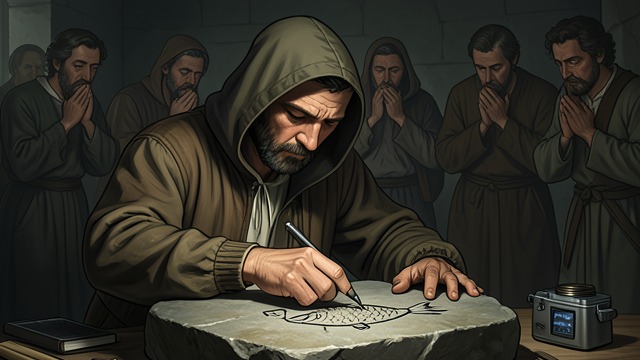
The Symbol Explained
The Symbol Explained
A covert identity
Chilo explains the fish as a sign used by Christians to recognize one another without public declaration.
Discovery creates danger
Vinicius’s curiosity becomes a route into Christian spaces, while the same recognition system exposes the community to surveillance.
A Sign at the Prison
A Sign at the Prison
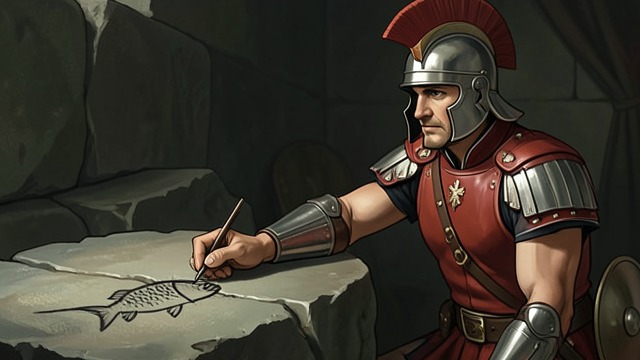
A guard reveals allegiance
A Praetorian secretly traces the fish on stone and admits that he too worships Christ.
Hidden believers within Rome
The sign shows that Christianity has reached even the imperial guard, beyond the community’s visible gatherings.
The Cross in the Lararium
The Cross in the Lararium
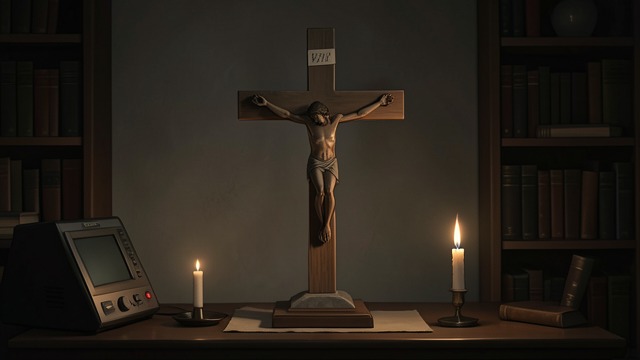
A new household emblem
Vinicius finds a Christian cross where Roman household gods would normally stand and uses a taper from the shrine to search.
Reverence replaces habit
The cross becomes a quiet link between Lygia’s faith and Vinicius’s emerging belief.
Signs of a New Community

Signs of a New Community
Faith enters the household
Vinicius invites servants to identify themselves through the fish sign and promises freedom to long-serving slaves.
A symbol becomes social change
The mark now signifies not merely secret affiliation but a practical challenge to Roman hierarchy.
During Vinicius’s early conversations with Lygia
During Chilo’s first report to Petronius
After Vinicius is refused entry to the Mamertine prison
During Vinicius’s search through the burning house
After Vinicius frees his household slaves
